OpenAI's Biggest Names Are Quietly Backing a New $100M AI Investment Fund

Photo by Austin Distel on Unsplash
Some of the most influential people from OpenAI’s early days are making a major move into venture capital. Zero Shot, a newly formed venture fund with deep connections to OpenAI, just hit its first close on a $100 million goal, and the founders are already cutting checks to promising AI startups.
The fund’s founding team reads like an OpenAI alumni roster. Evan Morikawa, who led applied engineering during the launches of DALL·E and ChatGPT, is now involved with robotics startup Generalist. Andrew Mayne, OpenAI’s original prompt engineer and host of The OpenAI Podcast, founded Interdimensional, an AI deployment consultancy. Shawn Jain, an engineer and former researcher at OpenAI, became a VC and co-founded GenAI startup Synthefy. They’re joined by Kelly Kovacs, a former founding partner at 01A (the growth-stage venture firm co-founded by Dick Costello and Adam Bain), and Brett Rounsaville, who previously worked at Twitter and Disney and now serves as CEO of Interdimensional.
According to Mayne, these founders didn’t set out to start a VC fund. They had been friends for years and worked together through OpenAI’s explosive growth period. After leaving OpenAI, they found themselves constantly fielding requests from VCs seeking advice on emerging AI technologies and from founder friends wanting guidance. That’s what initially inspired Mayne to start his consulting company. But as more friends launched AI startups, the group realized they could do something bigger.
“Maybe we should do our own fund, because we think we have a pretty good sense of where things are headed, and we have this great access to people who we think are incredible builders”, Mayne explained. They spotted gaps between what VCs were funding and what the market actually needed.
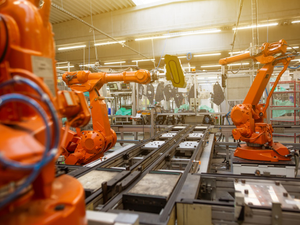
Zero Shot has already made several investments. They backed Worktrace AI, founded by former OpenAI product manager Angela Jiang, which is building AI-based management software to help enterprises automate tasks. The startup raised a $10 million seed round that included support from OpenAI’s Fund. They also invested in Foundry Robotics, which recently closed a $13.5 million seed round led by Khosla Ventures for its AI-enhanced factory robotics technology. A third portfolio company is still in stealth mode.
What makes this fund different is the founders’ ability to spot hype versus reality in AI. Mayne is skeptical of most “vibe coding” startups, believing model makers will quickly make such platforms obsolete. Morikawa is skeptical of video data companies focused on robotics embodiment training, arguing the gap between current capabilities and what’s needed remains insurmountable. He’s equally critical of most digital twin startups, having tested them against standard LLM models.
“There is a real skill in knowing how to predict where these models will be going next, because it’s extremely not obvious”, Morikawa said. Zero Shot also has recognizable advisors including Diane Yoon (OpenAI’s former head of people), Steve Dowling (former head of communications at OpenAI and Apple), and Luke Miller (former product leader at OpenAI), who will share in the fund’s carried interest.
AUTHOR: mei
SOURCE: TechCrunch