Artemis II Just Broke the Moon Distance Record. And the Engineering Behind It Is Insane
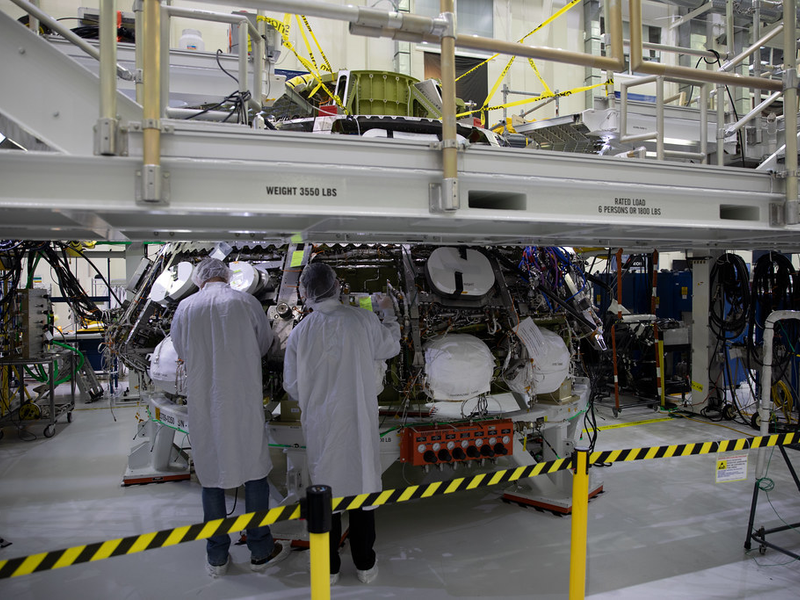
Photo by NASAKennedy | License
On April 2nd, NASA made history when the Space Launch System rocket blasted off from Earth, carrying four astronauts, Reid Wiseman, Victor Glover, Christina Koch, and Jeremy Hansen, beyond low Earth orbit for the first time since the Apollo 17 mission in 1972. But here’s what’s really mind-blowing: the path they’re taking to get there isn’t a straight shot. It’s a carefully calculated dance between two celestial bodies that shows just how brilliant modern aerospace engineering has become.
After launching, the spacecraft didn’t immediately head toward the moon. Instead, the Interim Cryogenic Propulsion Stage (ICPS) pushed the Orion capsule into high Earth orbit, where the crew spent about 23 hours running checks and making sure everything was working perfectly. Once they got the green light, the ICPS separated, and the real journey began.
The mission’s midpoint happens on April 6th, and here’s where things get wild. The Artemis II crew will travel approximately 10,300 kilometers beyond the moon, shattering the Apollo 13 record by a massive margin. Apollo 13 only made it about 400 kilometers past the lunar surface, so Artemis II is going way deeper into space. During the lunar flyby, the spacecraft will get as close as 7,400 kilometers to the moon’s surface while passing over the far side, the part we can’t see from Earth.
But the spacecraft won’t actually orbit the moon. Instead, it’ll use the moon’s gravity as a slingshot to fling itself back toward Earth in what NASA calls a figure-eight trajectory. This isn’t just clever, it’s genius. The entire mission is designed with redundancy built in, so if something goes wrong with the engines or other systems, the spacecraft can still return safely to Earth just by riding gravity back home. That’s called a passive trajectory reentry, and it’s the kind of engineering that keeps astronauts alive when things get sketchy.
The crew will splash down in the Pacific Ocean on April 11th, about nine days and 13 hours after launch, where the US Navy will pick them up. But before that happens, they’ll be testing critical tech that future missions will depend on, stuff like advanced radiation shielding and long-distance communication between Earth and a spacecraft at lunar distances.
What makes Artemis II so significant isn’t just that it’s sending humans back to the moon. It’s that every aspect of this mission, from the non-linear trajectory to the backup systems, is laying the groundwork for humanity’s next phase of space exploration. We’re not just going to the moon anymore, we’re going farther than ever before, and we’re doing it smarter.
AUTHOR: kg
SOURCE: Wired