Marin County is Testing a Wild New Way to Save Bay Area Marshes From Rising Seas
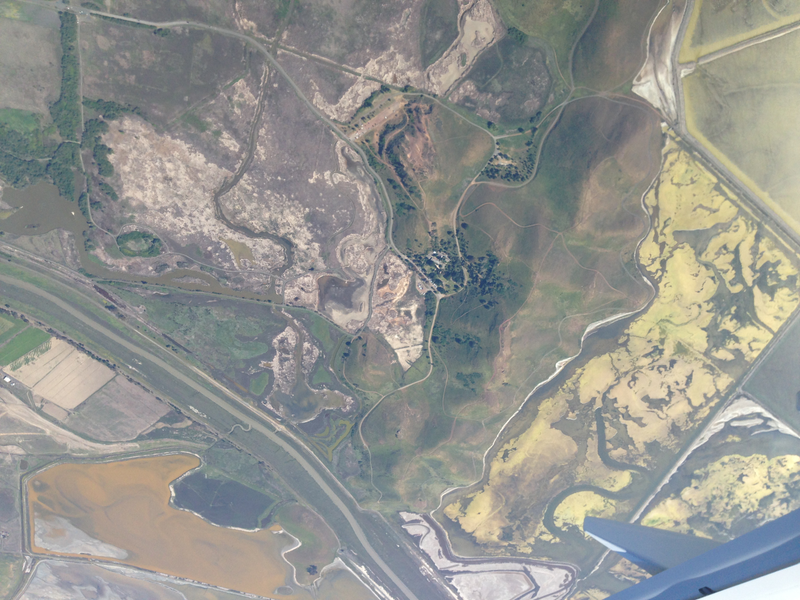
Photo by victorgrigas | License
Picture this: the San Francisco Bay’s tidal marshes are literally drowning, but not in the way you’d think. These wetlands need constant sediment replenishment to survive sea level rise, and a groundbreaking pilot project in Marin County might just have cracked the code on how to save them.
The experiment centers on Gallinas Creek, a waterway that hasn’t been properly dredged since 1992. Over three decades of neglect have left the creek choked with fine clay and silt, making it too shallow for boats and turning the water stagnant. For the families who live along the creek, many of whom aren’t rich tech bros but longtime residents of Santa Venetia, this is a real loss. There used to be an entire boating culture here, and now those docks are basically useless.
But Marin County’s solution is elegant: instead of using heavy machinery to scoop up sediment and dump it elsewhere, they’re planning to use water injection dredging, a technique already proven in shipping ports worldwide. Here’s how it works: a small vessel injects water into the creek sediment, creating what’s called a turbidity current, essentially a moving cloud of suspended particles that flows on its own momentum. As these particles drift into San Pablo Bay with the tide, they naturally flow toward the China Camp marsh, where most of the sediment settles and nourishes the wetland.
Roger Leventhal, Marin County’s senior civil engineer, is leading the charge. “We are the first people to do this in a tidal flood-control channel”, he explained. The approach is revolutionary because it works with nature rather than against it, reducing carbon emissions compared to traditional dredging and protecting endangered species like the salt marsh harvest mouse and golden eagles that depend on these ecosystems.
Of course, there’s a catch. Regulators will likely demand extensive modeling and monitoring to make sure the sediment plume doesn’t spread contaminants or mess up habitats. Multiple agencies including the U.S. Army Corps of Engineers and the Bay Regional Water Quality Control Board will need to sign off. And yeah, you can’t control where every particle of sediment ends up, some might drift out to the Bay or through the Golden Gate. But that’s nature, and thinking in geologic time is part of the deal.
The county just scored $640,000 in grants from the San Francisco Bay Restoration Authority to design and permit the project. The full build-out could cost around $2 million, but the long-term payoff could be huge. If successful, this approach could transform how Bay Area cities and counties manage their silted-up channels while simultaneously protecting marshes that are critical for flood protection and wildlife habitat. Leventhal points out there are tons of channels across the South Bay that desperately need help but that nobody can afford to dredge using traditional methods.
This is what “engineering with nature” actually looks like, smart, innovative, and way more sustainable than the old ways.
AUTHOR: cgp
SOURCE: Local News Matters