This SF Startup's Brain Implant Could Help Stroke Patients Move Their Hands Again
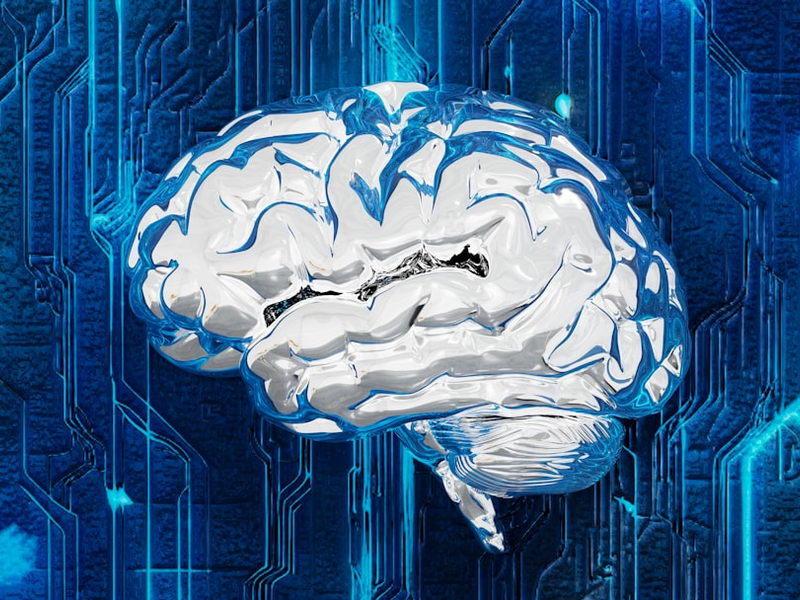
Photo by Ecliptic Graphic on Unsplash
Stroke is devastating. About two-thirds of survivors deal with serious damage to their hands and arms, and many never fully recover that mobility. But a brand-new San Francisco startup called Epia Neuro thinks they’ve got a solution that could change the game for thousands of people: a brain implant paired with a motorized glove that literally rewires your brain to help you move your hands again.
Epia is jumping into a space that’s absolutely exploding right now. Brain-computer interfaces, devices that pick up signals from your brain and translate them into actions, are attracting massive investment. Elon Musk’s Neuralink pulled in $500 million last year, and Sam Altman’s Merge Labs emerged with $252 million in funding earlier this year. But while those companies are focused on helping people control computers or communicate through digital voices, Epia’s taking a different approach: actually restoring hand function.
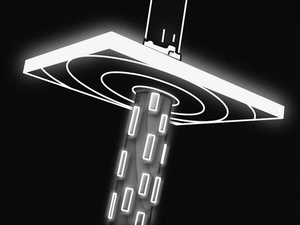
Here’s how it works. The startup implants a small disk-shaped device into your skull that detects your brain’s signals when you want to move your hand. You then wear a grip-assist motorized glove during rehabilitation or at home. The implant uses AI algorithms to translate your brain signals and combines that data with sensors on the glove to predict and execute gripping movements. Basically, the system learns what your brain is trying to tell your hand to do, then makes it happen.
The whole thing relies on neuroplasticity, your brain’s ability to form new connections and rewire itself. When you have a stroke, blood flow gets cut off to part of your brain, damaging tissue and causing paralysis. The wild part? Your brain still generates movement signals even after the stroke. Those signals just can’t reach your muscles anymore because of the damage. Epia’s implant grabs those signals from an undamaged part of your brain, figures out your intention to move, and uses the glove to actually do it. The more you use it, the stronger those neural pathways become, potentially meaning you’ll eventually need the glove less and less.
Michel Maharbiz, Epia’s CEO and a UC Berkeley professor, explains that even getting basic grip back would be life-changing. “If you could just give them the grip back reliably, an enormous number of things would open up in their daily life”, he says. Being able to dress yourself or eat independently instead of relying on constant care is huge.
Of course, there are still hurdles. Brain-computer interfaces need to be easy to implant and safe if they’re going to catch on. Epia’s procedure involves removing a small piece of skull and replacing it with the implant, it takes less than an hour. The device can be upgraded or swapped out later if needed, and a headset recharges it every few days.
The FDA already approved a wearable brain-computer interface called IpsiHand for stroke recovery, though results showed mixed success. Maharbiz argues that an implantable device works better because it sits closer to your actual brain. Epia’s planning to test its technology on real patients at Lenox Hill Hospital in New York later this year, with more testing sites coming by the end of 2026. We’re definitely watching this one.
AUTHOR: cgp
SOURCE: Wired