This Cornell Professor Is Fighting AI Cheating With Typewriters. And Students Are Actually Here For It
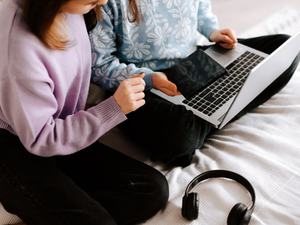
Photo by Enchanted Tools on Unsplash
Picture this: it’s 2026, and a German language classroom at Cornell University looks like something straight out of a 1950s office. Students are hunched over manual typewriters, pecking away at keys, listening to the satisfying ding of the bell at the end of each line. It’s not a nostalgia trip, it’s a revolution against AI-generated assignments.
Grit Matthias Phelps, a German instructor at Cornell, started this “analog assignment” back in spring 2023 when she noticed a frustrating trend: her students were using ChatGPT and online translation tools to produce grammatically perfect work without actually doing the thinking themselves. “What’s the point of me reading it if it’s already correct anyway, and you didn’t write it yourself?” Phelps asked. “Could you produce it without your computer?” The answer was often no.
So she did something radical. She hunted down dozens of used manual typewriters from thrift shops and online marketplaces and brought them into the classroom. Once a semester, students show up to find typewriters waiting at their desks, some with German keyboards, some with QWERTY, and no laptops, no spellcheckers, no delete keys, no internet. Just them, their thoughts, and the machine.
For students raised on smartphones and instant everything, it’s a trip. Freshman Catherine Mong didn’t even know how a typewriter worked. “I’d seen them in movies, but they don’t tell you there’s a whole science to using one”, she said. Phelps had to teach them how to feed paper manually, how hard to strike the keys without smudging the letters, and why the machine actually “dings”, oh, that’s what “return” means!
But something interesting happened when students actually sat with this technology. The distractions disappeared. No notifications, no ability to Google an answer or ask ChatGPT for help. Computer science major Ratchaphon Lertdamrongwong realized that without screens, he had to actually talk to his classmates and think more intentionally about his work. “I was forced to actually think about the problem instead of delegating to AI”, he said.
Students also had to make peace with imperfection. Mong, dealing with a broken wrist, had to type one-handed and accept that her page would have messy spacing and errors. At first, the perfectionist in her was frustrated. But then she leaned into it, using the typewriter’s quirks to create a visual style inspired by poet E.E. Cummings, complete with fragments and intentional spacing. She kept all her drafts with their pencil marks and mistakes. “I’m probably going to hang them on my wall”, she said.
While typewriters aren’t exactly making a comeback everywhere, Cornell’s experiment reflects a larger national trend: schools are turning to old-school methods like handwritten exams and oral tests to prevent AI cheating. And judging by student reactions, there’s something valuable happening beyond just catching cheaters. Students are rediscovering what it means to sit with their own thoughts, to struggle a bit, and to find joy in that struggle.
AUTHOR: cgp
SOURCE: AP News