What's Really Happening to Reproductive Health Care in America Right Now

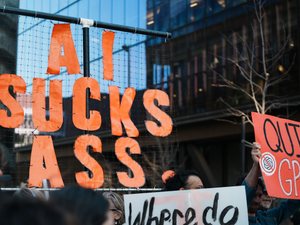
Photo by Reproductive Health Supplies Coalition on Unsplash
Four years after the Supreme Court’s seismic decision to overturn Roe v. Wade, the landscape of reproductive health care in the United States has fundamentally shifted. To break down exactly what’s changed and what it means for people seeking abortion care, reproductive health experts recently sat down for a conversation that cuts through the noise and gets to the real story.
Diana Greene Foster, a demographer and professor at the University of California, San Francisco, has spent her career researching what actually happens when people are denied abortion access. Her groundbreaking work, including “The Turnaway Study”, followed thousands of women over a decade to understand the real-world consequences of abortion restrictions. Foster, who was recognized as a 2023 MacArthur Fellow for her research, has continued to publish updated findings that illuminate how these policy changes affect real people’s lives.
Mariana Horne, the outreach and education coordinator at ACCESS Reproductive Justice, works directly in the trenches of California’s abortion fund. She’s on the front lines of removing barriers to care and building community understanding around reproductive justice, which goes way beyond just abortion access to include the right to have children, not have children, and parent the children you have in safe conditions.
Their March discussion touched on the dramatic changes since the Dobbs v. Jackson Women’s Health Organization ruling in 2022, which eliminated the federal constitutional right to abortion that had been protected for nearly 50 years under Roe v. Wade. The ruling didn’t just create a legal shift; it fundamentally reshaped how people access reproductive health care across different states.
What makes this conversation especially valuable is that it brings together research-backed data with on-the-ground experience. Foster’s demographic research shows us the patterns and trends, while Horne’s work at ACCESS reveals how those patterns actually affect individuals and communities trying to navigate a fractured system.
The reproductive health landscape today is essentially two Americas: states where abortion access remains protected and states where restrictions have created serious obstacles for people seeking care. California, where both panelists are based, has positioned itself as a haven for reproductive freedom, but that also means the state is seeing increased demand as people from other states travel here for care.
These experts help explain what reproductive freedom actually means in practice, how restrictions create real harm, and what people need to know about accessing care in 2026. Their insights reveal the human impact behind the headlines and statistics, something that’s crucial for understanding why reproductive justice remains such a critical issue in American politics and public health.
You can listen to the full conversation to hear their detailed analysis and get a clearer picture of where we stand right now.
AUTHOR: mb
SOURCE: San Francisco Public Press