This Guy Is Literally Making Music With His Brain, and It's Wild
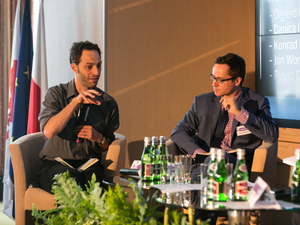
Photo by Ars Electronica | License
Imagine being able to compose a sick beat just by thinking about it. That’s not science fiction anymore, it’s what Galen Buckwalter, a 69-year-old research psychologist from LA, is doing right now with a brain implant.
Buckwalter became a quadriplegic at 16 after a diving accident, but he didn’t let that stop him from contributing to cutting-edge neurotechnology. In 2024, he underwent surgery to have six chips implanted in his brain as part of a study at Caltech. These chips, made by Blackrock Neurotech, read neural activity and decode his movement intentions, letting him operate a computer with his thoughts and feel sensation in his fingers again.
But here’s where it gets really interesting: a Caltech grad student named Sean Darcy developed software that translates Buckwalter’s thoughts into musical tones. Basically, when Buckwalter thinks about moving different parts of his body, each movement triggers a different pitch. “Each neuron has a baseline firing rate”, Buckwalter explained. “If I activate that neuron, the pitch will go up, and if I suppress it, it will come back down”. Right now, he can control two tones simultaneously by thinking about two different movements, kind of like patting your head and rubbing your stomach at the same time, but way cooler.
The technology is still evolving. Darcy created a virtual keyboard where Buckwalter has to activate neurons above a certain threshold to produce tones, making it feel more like actually playing an instrument. It takes serious concentration to learn, and the neurons being detected can shift from day to day, so Buckwalter has to adapt and find which ones are active each session.
What makes this story even better is that Buckwalter is using this technology for something deeply personal: music. He’s been in the LA-based punk rock band Siggy for 29 years, and he recently recorded a track called “Wirehead” that incorporates tones he created with his neural signals. The song is literally a punk reflection on the possibilities of brain-computer interfaces.
Buckwalter has been pretty vocal about one major critique of BCI research: scientists often focus on the technical side without asking participants what would actually make their lives better. “The community has to incorporate that if this technology is really going to advance”, he said. “For this technology to really succeed, people have to love it. They have to love the experience of it”.
His point is solid. Brain-computer interfaces are being developed to restore communication and movement in people with severe disabilities, which is absolutely crucial. But Buckwalter is pushing researchers to think bigger, to consider how BCIs could enhance creativity and give people new ways to feel and express themselves. Because at the end of the day, we’re more than just our ability to move and sense. We’re creative beings, and technology should reflect that.
AUTHOR: kg
SOURCE: Wired