California's Aerospace Industry Is Literally Sending Humans Back to the Moon
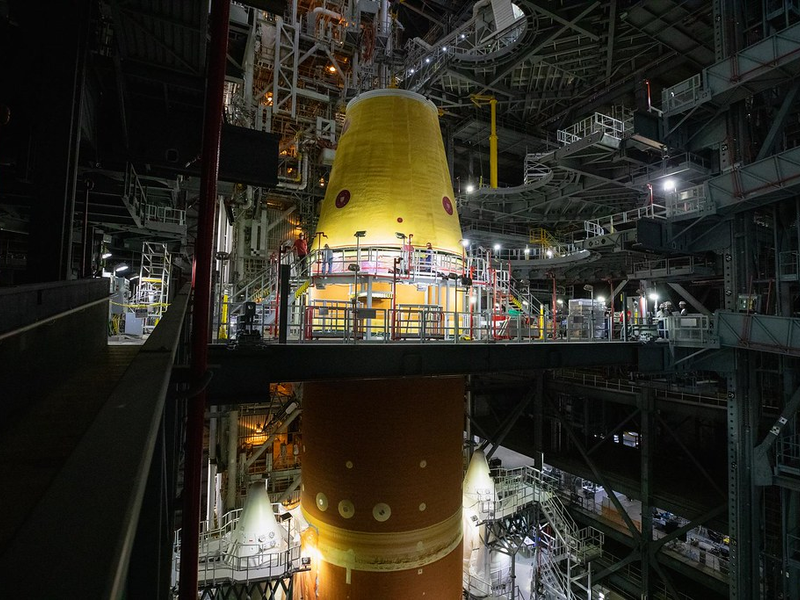
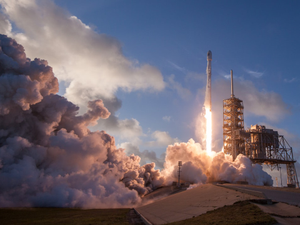
Photo by NASA’s Marshall Space Flight Center | License
California just proved why it’s the undisputed king of space exploration. With over 500 companies and 16,000 workers contributing to NASA’s Artemis II mission, the Golden State is powering humanity’s return to the lunar frontier in a way no other state can match.
Artemis II represents NASA’s first crewed lunar mission in more than 50 years, and California’s fingerprints are all over it. The mission will send four astronauts on a ten-day journey around the moon to test deep-space systems before future lunar landings. What’s wild is that virtually every major component powering this historic mission comes from California-based companies and their skilled workforce.
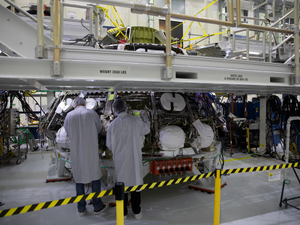
The scope of California’s contribution is genuinely staggering. Major aerospace contractors like Lockheed Martin, Boeing, Northrop Grumman, and SpaceX are leading the charge, but the real backbone comes from hundreds of smaller manufacturers and specialized firms. Aerojet Rocketdyne in Canoga Park is upgrading and testing the 16 RS-25 engines that will power the Space Launch System rocket. Companies like VACCO Industries are producing specialty valves and cryogenic fluid control systems. Others are manufacturing everything from metallic tubing to precision-machined engine components. It’s a massive, interconnected ecosystem of innovation.
What’s particularly cool is that one of the four Artemis II astronauts is Victor Glover, a California native born in Pomona who studied at Cal Poly San Luis Obispo. He’ll make history as the first Black astronaut to pilot and reach the moon.
California’s dominance in aerospace isn’t new, it stretches back decades. The Saturn V rockets that carried Apollo astronauts to the moon were built almost entirely in California. The Space Shuttle fleet was assembled in Palmdale. The RS-25 engines powering Artemis II have been designed and manufactured in the San Fernando Valley since the 1970s. This is generational expertise.
The numbers back it up. As of 2023, California accounts for 25 percent of NASA’s total procurement spending nationwide, that’s $5.8 billion annually. The state’s share of NASA’s R&D services is 67 percent. Each NASA job in California supports an additional 35.7 jobs across the state, resulting in a total employment impact of over 66,000 jobs. The aerospace and defense sector contributes an estimated $35 billion annually to California’s GDP.
When Artemis II concludes its mission, the Orion spacecraft will splash down in the Pacific Ocean off the coast of San Diego, continuing a tradition that dates back to the Apollo program. California literally bookends this entire mission, from the companies building it to the waters that will welcome the astronauts home. That’s the kind of dominance that doesn’t happen by accident.
AUTHOR: cgp
SOURCE: gov.ca.gov