Four Astronauts Just Broke the Distance Record and Witnessed Something Humans Were Never Meant to See
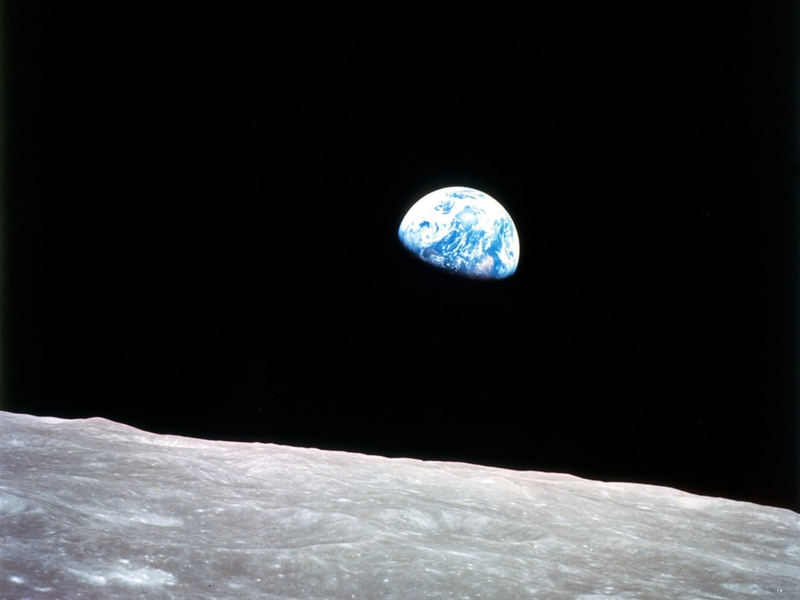
Four astronauts aboard NASA’s Artemis II mission just experienced something that defies description. On Monday, the crew, Reid Wiseman, Victor Glover, Christina Koch, and Jeremy Hansen, broke the record for the farthest humans have ever traveled from Earth, reaching a maximum distance of 252,756 miles. But the real story isn’t just about the numbers; it’s about witnessing the Moon in a way that will fundamentally change how we think about space exploration.
Wiseman, the mission’s commander, kept trying to find the right words to describe what he was seeing. “There are no adjectives”, he said. “I’m going to need to invent some new ones to describe what we’re looking at outside this window”. After spending nearly eight hours staring at the lunar landscape, the crew members realized that three years of training and NASA’s geology courses couldn’t fully prepare them for the sheer magnitude of what they’d witness.
The mission’s closest approach to the Moon happened at 7 pm EDT on Monday, when Artemis II soared within 4,067 miles of the lunar surface. But the real moment of awe came when the Sun disappeared behind the Moon. For nearly an hour, the four astronauts experienced a cosmic eclipse, with the Moon silhouetted against the Sun and illuminated only by Earthshine, the faint light reflected off our home planet a quarter-million miles away. Glover, the pilot, struggled to capture the moment on camera. “What we’re seeing, we’re just not picking up on the cameras”, he said. “After all the amazing sights that we saw earlier, we just went sci-fi. It just looks unreal”.
Canadian astronaut Jeremy Hansen added his own perspective on the corona, the Sun’s outer atmosphere creating a halo effect around the Moon’s perimeter. “The Sun is lighting up the entire limb of the Moon”, he said. “You can still make out little bits of topography around the entire limb”.
Beyond the jaw-dropping views, Artemis II accomplished something scientifically significant. The crew observed the Moon’s far side in daylight for the first time, documenting features like Mare Orientale, an ancient impact basin stretching nearly 600 miles in diameter. While robotic missions have mapped these areas before, human observers provide something machines can’t: real-time feedback and a perspective that bridges Earth and space.
Cristi Koch, a spacecraft engineer and Antarctic explorer, captured the mission’s deeper meaning: “The Moon really is its own unique body in the Universe. It’s not just a poster in the sky that goes by. It is a real place”. As NASA pushes toward landing humans on the Moon by 2028, Artemis II has done something crucial, it’s shown that our nearest celestial neighbor isn’t just a destination for rovers and orbiters. It’s a place waiting to be explored by us.
The crew is now headed home on a free return trajectory, which means Earth’s gravity is pulling them back without needing major rocket burns. But the images they’ve captured and the observations they’ve made will inspire the next generation of lunar missions.
AUTHOR: mei
SOURCE: Ars Technica