Nature's Amazing Sensory Superpower: How Animal Whiskers Work
Ever wonder how animals navigate their complex environments with such precision? The secret might just be hiding in their whiskers. Scientists have discovered that these seemingly simple hairs are actually sophisticated sensory tools that provide remarkable environmental intelligence.
Whiskers, scientifically known as vibrissae, are far more complex than ordinary hair. They’re found in a wide range of mammals, including rats, cats, seals, and even elephants. Each whisker is a marvel of biological engineering, connected to dense neural networks that transform basic hair into an advanced sensing system.
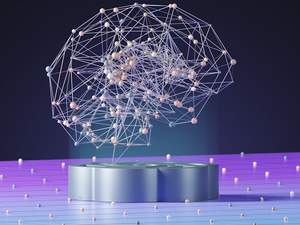
For instance, rat whiskers demonstrate an incredible sensory capability. A single rat might have around 30 large whiskers and dozens of smaller ones, creating a complex scanning system. These whiskers are inserted into follicles connected to neural “barrels” containing up to 4,000 tightly packed neurons. This intricate arrangement allows rats to perform advanced tasks like texture analysis, path finding, and object recognition.
The whiskers’ structure enables them to resonate at different frequencies, with shorter whiskers near the nose and longer ones further back. This unique design allows animals to create a sophisticated “frequency map” of their immediate environment, essentially giving them a tactile version of echolocation.
Beyond rodents, elephants provide another fascinating example. Their trunk whiskers offer incredible sensitivity, enabling them to sense and interact with their surroundings with remarkable precision. These whiskers are so advanced that scientists describe them as having a form of “material intelligence,” allowing elephants to manipulate objects as delicate as peanuts with extraordinary control.
Research into animal whiskers isn’t just a curiosity, it has practical implications. Scientists are exploring how these natural sensing systems could inspire advanced tactile sensors in robotics, potentially revolutionizing how machines interact with their environment.
As we continue to study these incredible biological tools, we’re reminded that nature’s design often surpasses our most advanced technological innovations.
AUTHOR: mp
SOURCE: Ars Technica