This Photographer's Stunning Series on Suburbia Will Make You Question Everything About Development
Alejandro Cartagena’s journey to becoming one of the most important documentary photographers of our time started in a pretty unexpected place: a bird-watching class in the Dominican Republic when he was just 11 years old. Though he eventually traded his binoculars for a skateboard, those early lessons in observation stuck with him. Years later, when Cartagena picked up a camera in his mid-20s while living in Monterrey, Mexico, he discovered something that would shape his entire artistic vision: images could tell stories that words alone couldn’t capture.
“I was enthralled with the idea that images can mean things”, Cartagena said. “I know that sounds maybe naive, but it really was an awakening of, ‘Wow, there’s something that one can do with images that is unique to image making’”.
Now 49, Cartagena’s work is being showcased in a major retrospective called “Ground Rules” at the San Francisco Museum of Modern Art through April 19. The exhibition features some seriously powerful photographic series that dig into issues like displacement, housing, and the consequences of rapid urban expansion, themes that hit especially hard here in the Bay Area.
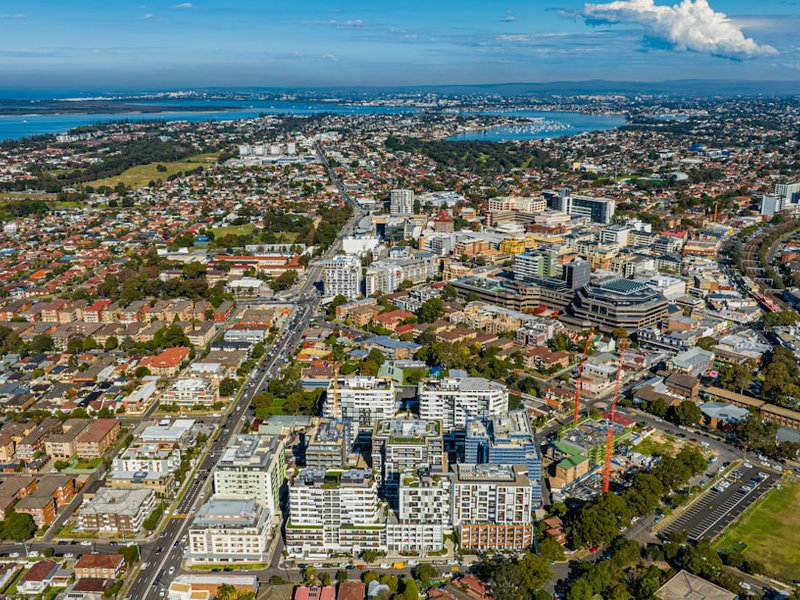
One of his most compelling projects, “Suburbia Mexicana”, documents the explosive suburban sprawl that happened in Monterrey during the early 2000s. After a change in government, officials literally modified the constitution to enable massive housing developments. What sounds progressive on paper became chaotic pretty fast. Construction companies rushed to build millions of homes across Mexico, but the infrastructure, transit systems, sewage, electrical systems, couldn’t keep up. Drug cartels also exploited the chaos, moving into these new suburban communities that had nowhere near enough police presence to handle the problems.
“You had five, six companies that took over, in coordination with the government to create this housing program that developed millions of homes all over Mexico”, Cartagena recalled. In less than six years, his hometown went from 60,000 people to half a million.
His other major work, “Carpoolers”, captures construction workers and landscapers riding in the backs of trucks to get to their jobs because reliable public transit doesn’t exist. Cartagena stood on the same pedestrian overpass multiple times a week, shooting from above, and what he captured was both intimate and devastating.
What makes Cartagena’s approach so effective is that he doesn’t just show you one perspective. He builds entire visual narratives that let you see the full impact of what’s happening. As Shana Lopes, SFMOMA’s assistant photography curator, put it: “He’s not trying to trick anybody with his work. He’s trying to invite us into his process”.
The really fascinating part? These aren’t just Mexican stories. Cartagena’s work speaks to universal patterns of suburbanization that have happened across Europe, the United States, and beyond. The rhetoric around home ownership, the promises of suburban life, the unintended consequences, they’re eerily similar no matter where you look.
For Bay Area residents dealing with our own housing crisis and development debates, Cartagena’s work feels urgently relevant.
AUTHOR: rjv
SOURCE: San Francisco Public Press