A 70-Person German Startup Is Quietly Beating Silicon Valley at AI Image Generation
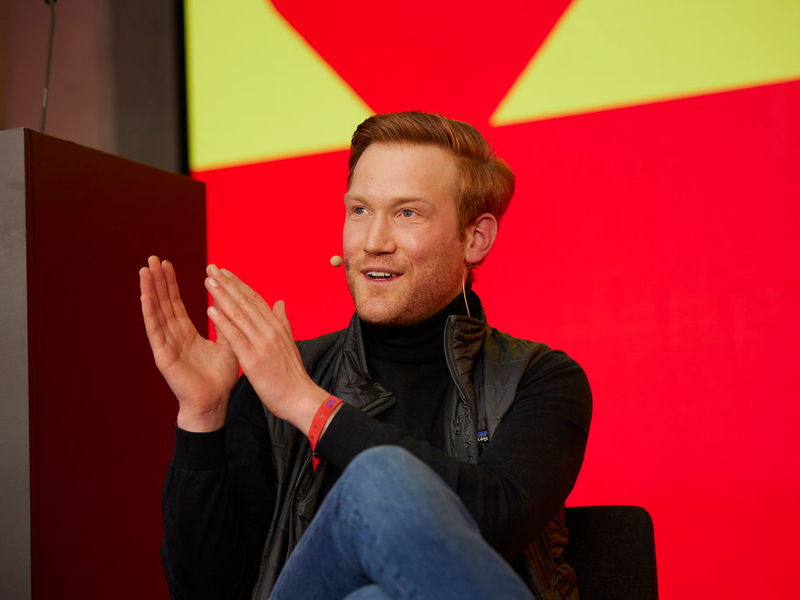
Photo by Hubert Burda Media | License
While San Francisco’s tech elite obsess over the next big thing, a relatively tiny startup based in Germany’s Black Forest region is eating their lunch in the AI image generation space. Black Forest Labs, which only has 70 employees, has somehow managed to become one of the world’s top competitors to OpenAI and Google, without even being in the Bay Area.
The company raised funds at a $3.25 billion valuation last December and has already locked in deals with some of the biggest names in tech. Adobe, Canva, Microsoft, Meta, and even Elon Musk’s xAI have all turned to Black Forest Labs to power their AI image features. In September, Meta alone signed a $140 million multiyear deal for access to the startup’s technology. The fact that these giants are willing to pay big money speaks volumes about the quality of what Black Forest Labs is putting out.
On benchmarks tracked by third-party firm Artificial Analysis, Black Forest Labs’ image generators rank just below OpenAI and Google’s offerings. They’re also some of the most downloaded text-to-image models on Hugging Face, meaning tons of AI image tools floating around the internet are probably using a free version of their technology without you even knowing it.
Here’s the wild part: Black Forest Labs has historically had way fewer resources than its competitors. So how are they winning? The company developed a more efficient research approach called latent diffusion, which essentially allows AI models to first sketch out a rough blueprint of an image before filling in the details. According to cofounder Andreas Blattmann, this approach “enabled us to put out very powerful models that took orders of magnitude less resources than our competitor’s models”.
The trio of cofounders, Blattmann, Robin Rombach, and Patrick Esser, made their names publishing groundbreaking AI research back in 2021. They got hired by Stability AI in 2022 and helped release Stable Diffusion, the popular open-source AI image generator. After two years, they bounced and started Black Forest Labs in 2024.
Instead of relocating to San Francisco like every other ambitious startup, they kept their headquarters near their hometowns in Freiburg, Germany. Blattmann credits this decision as key to their success, arguing that being outside the chaos of Silicon Valley actually helps them focus on what matters. “Whenever I’m here in SF I love it, but it’s also very hard to focus because there’s so much stuff going on”, he said.
Looking ahead, Black Forest Labs isn’t stopping at image generation. The company plans to unveil a robot powered by one of its AI models later this year and is in talks with hardware companies about powering features in smart glasses and other physical devices. Blattmann sees visual intelligence as way bigger than just creating content, he’s fixated on what the AI industry is calling “physical AI”, where models can actually perceive and take action in the physical world.
It’s a refreshing reminder that you don’t need to be in Silicon Valley to build world-class AI technology.
AUTHOR: mb
SOURCE: Wired