Scientists Finally Figured Out Why Your Cat Never Gets Hurt When It Falls
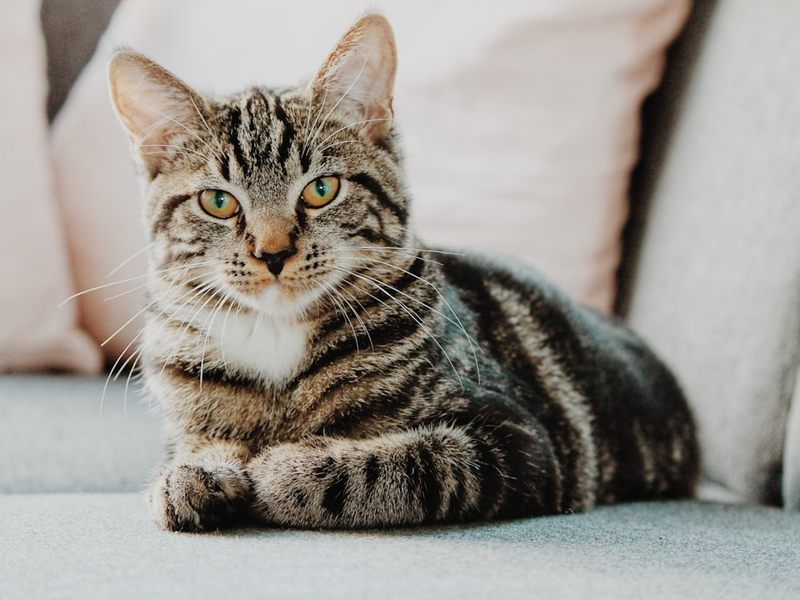
Photo by Erik-Jan Leusink on Unsplash
You’ve probably witnessed it a thousand times: your cat takes a tumble, does some sort of mid-air gymnastics move, and lands perfectly on all four paws like nothing happened. It almost seems like magic, right? Well, researchers at Yamagata University in Japan just published a study that explains the surprisingly complex biomechanics behind this feline superpower, and it’s way more interesting than you’d think.
The secret, according to their research published in The Anatomical Record, lies in the unique structure of a cat’s spine. Unlike humans, whose spines are pretty uniformly flexible throughout, cats have two very different sections. The thoracic region (the upper back area) is incredibly flexible, we’re talking about 50 degrees of rotation with minimal effort. Meanwhile, the lumbar region (lower back) is significantly stiffer and acts like an anchor.
To figure all this out, the research team did some serious detective work. They analyzed the spines of five deceased cats, mechanically testing different sections to measure flexibility and resistance to rotation. They also used high-speed cameras to film live cats dropping onto soft cushions, frame-by-frame analyzing every movement.
Here’s where it gets wild: when a cat falls, it doesn’t just randomly twist around. There’s an actual sequence. The cat first rotates its head and front legs toward the ground using that super-flexible thoracic spine. Then the rest of the body follows. The stiff lumbar region is crucial here, it acts like a stabilizer, preventing the cat from losing control while the front half is rotating independently. Basically, your cat’s spine is a perfectly engineered tool for staying safe during falls.
The researchers describe this as a “precise sequence” where the front of the trunk rotates first, followed by the back. It’s not one smooth motion, it’s calculated and coordinated down to the exact order of movement. This sequential rotation combined with the specific flexibility differences between spine regions is what makes cats such incredible faller.
Beyond just satisfying our curiosity about why cats are basically tiny ninjas, these findings have real-world applications. Veterinarians could use this knowledge to better treat spinal injuries in cats. Scientists are even looking at how these principles might help develop more agile and flexible robots. It’s one of those studies that shows how understanding nature’s solutions can lead to actual innovations.
So next time your cat launches itself off a bookshelf and sticks the landing, you’ll know exactly what’s happening in that furry little body. It’s not magic, it’s millions of years of evolution creating one of the most biomechanically perfect creatures on the planet.
AUTHOR: tgc
SOURCE: Wired