Google Just Finished Restoring an Icon: Here's What Hangar One Means for the Bay Area's Future
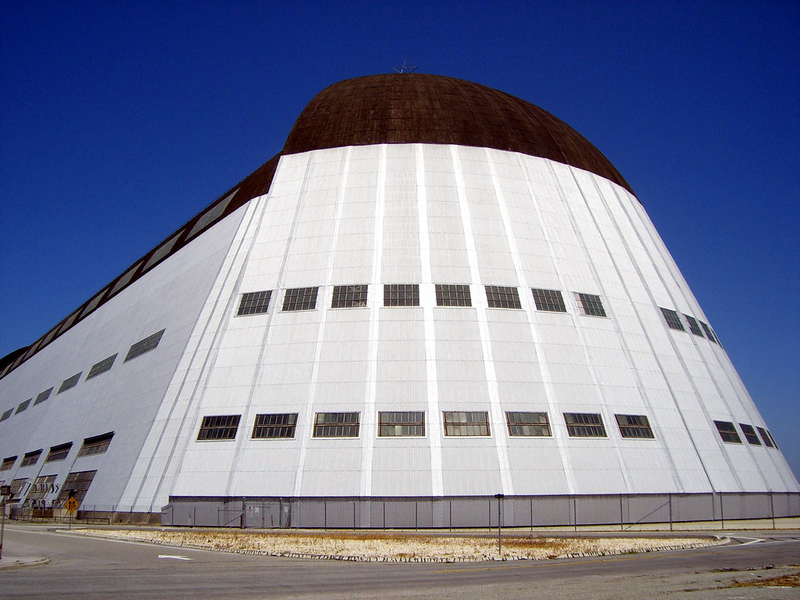
Photo by Telstar Logistics | License
Google has officially completed a massive restoration of Hangar One at Moffett Federal Airfield in Mountain View, and honestly, it’s kind of a big deal. The company’s Planetary Ventures unit just wrapped up transforming one of the largest freestanding structures on Earth, and to give you a sense of scale, if you tipped over San Francisco’s Salesforce Tower, it could fit inside this thing.
The hangar spans 1,133 feet long, 308 feet wide, and 200 feet high. One million man-hours went into the restoration effort, which involved removing lead paint and PCBs from the steel before installing new exterior features. In February, the EPA formally confirmed that toxic remediation of the site was complete.
Former U.S. Rep. Anna Eshoo was instrumental in keeping Hangar One from being demolished. Back in 2009, she met with then-Secretary of the Navy Raymond Mabus and convinced him that the Navy needed to fulfill its obligations to restore the structure properly. Without her persistence over the years, this entire project might never have happened.
“Look what you did. Bravo”, Eshoo said at the celebration of the completed restoration. Rep. Zoe Lofgren, who grew up just five miles from the hangar, also praised the collaborative effort. “Without Anna, we wouldn’t be here, and without Google, we wouldn’t be here”, she said.
Google leased the hangar from NASA in 2015 for 60 years, and the company brought in some serious talent to get the job done right. CBRE served as project manager, McCarthy Builders was the general contractor, HDR handled design work, KPFF was the structural engineer, and the Historic Resources Group provided historical consulting.
But here’s where it gets exciting for the future. Google is exploring the possibility of setting up workspaces inside Hangar One itself, similar to how the company operates its unique Spruce Goose site in Los Angeles. Meanwhile, UC Berkeley is planning to develop the Berkeley Space Center on a 36-acre site next to Hangar One.
Eugene Tu, director of NASA Ames Research Center in Mountain View, believes this could be transformative. “Hangar One can be a springboard for innovation”, he told us. “Google, UC Berkeley, and startup companies can all be part of this”. He added that Hangar One and the UC Berkeley center together could create “a new innovation and research ecosystem for Silicon Valley”.
This project represents exactly the kind of public-private partnership that our region needs, one that preserves our history while building toward a tech-forward future. Hangar One has been a symbol of Bay Area innovation for generations, and now it’s ready for its next chapter.
AUTHOR: cgp
SOURCE: The Mercury News