California's Getting Serious About Homelessness: Here's What Changed
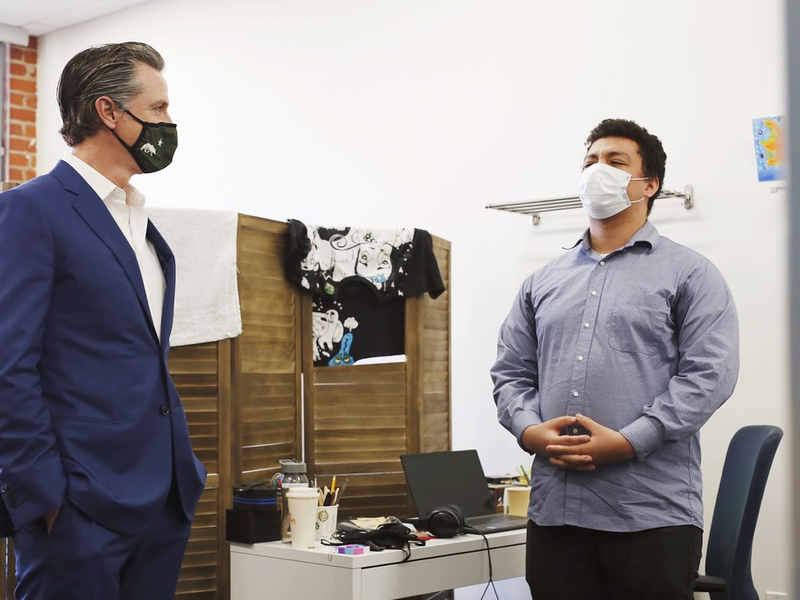
Photo by Office of the Governor of California | License
California just hit a major milestone in the fight against homelessness, and it’s actually worth getting excited about. For the first time in nearly two decades, the state saw a drop in unsheltered homelessness, a nine percent decline. That’s huge, especially when the rest of the country is moving in the opposite direction. Now, Governor Newsom is doubling down on what’s working by introducing new accountability measures and throwing nearly $291 million at communities to expand housing and mental health services.
The centerpiece of this push is the CARE Act, California’s groundbreaking approach to getting people with untreated schizophrenia and other psychotic disorders the help they actually need. Unlike punitive systems of the past, CARE Court connects people with a team of providers and a civil court judge to guide them toward voluntary treatment and stable housing. Since the program rolled out statewide in December 2024, more than 3,800 petitions have been filed, and over 4,000 people have been diverted to services without needing court involvement. More than 1,851 people have gone through the full CARE Court process.
To keep the momentum going, the state just named ten “CARE Champions”, counties absolutely crushing it with CARE implementation. Alameda County, where the Bay Area is well-represented, made the list. These counties include Humboldt, Tuolumne, Marin, Napa, Merced, Sutter, Santa Barbara, San Mateo, and Imperial. But here’s the reality check: ten other counties, including San Francisco, Santa Clara, Los Angeles, and Orange County, are now on a “CARE ICU” list, meaning they’ll get extra state support to step up their game.
The funding announced today includes $131.8 million in Homekey+ awards for eight affordable housing communities that will create 443 new homes for people experiencing or at risk of homelessness, including veterans. Another $159 million in homeless assistance funding is going to 20 regions across the state to build permanent housing and expand proven interventions.
This all builds on Proposition 1, the $6.4 billion behavioral health bond voters approved in 2024. When fully implemented, Prop 1 will create 6,800 residential treatment beds and 26,700 outpatient treatment slots. That’s addressing a serious gap, people with untreated psychosis in California are ten times more likely to be homeless and sixteen times more likely to be incarcerated, a direct legacy of decades of neglect dating back to when state hospitals were shut down without alternatives.
The state is also tracking all this progress through accountability.ca.gov, where you can see how your community is actually performing on housing, homelessness, and behavioral health care. It’s a reminder that fixing homelessness isn’t just about compassion, it requires real money, real oversight, and local governments doing their part. The question now is whether the underperforming counties will step up or keep falling behind.
AUTHOR: tgc
SOURCE: gov.ca.gov