San Francisco and PG&E Are Still Worlds Apart on Municipal Utility Takeover

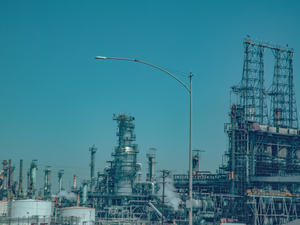
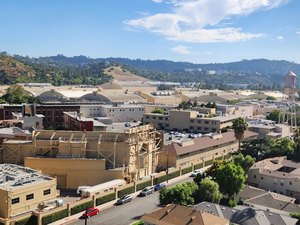
Photo by Kellen Riggin on Unsplash
San Francisco’s ambitious plan to take over PG&E and create a municipally-owned utility is hitting some serious roadblocks, and honestly, the two sides are nowhere close to figuring out a deal.
The city first proposed this idea back in 2019 and formally petitioned the California Public Utilities Commission (CPUC) in 2021. Now, nearly a decade later, they’re still stuck on the most basic question: what is PG&E’s infrastructure actually worth?
San Francisco offered $2.5 billion, but PG&E basically laughed at that number. The company says the city is “dramatically underpriced” the value of its electric system, claiming the assets are worth $2-3 billion more than what’s being offered. PG&E also argues that San Francisco hasn’t accounted for the massive costs of actually separating the two systems.
The CPUC threw a wrench in the whole process by deciding it needed to oversee the valuation itself. That means San Francisco has to complete a complex evaluation of the assets, how the separation would affect PG&E’s business, and the potential impact on other customers in San Mateo County, Brisbane, and Daly City who depend on PG&E.
Here’s where it gets really messy: the Martin substation in Daly City supplies about 70 percent of San Francisco’s power, but it also serves customers across San Mateo County. The two sides can’t even agree on how to physically separate this critical piece of infrastructure without disrupting service to everyone else. Plus, there’s a major gas line running underneath it that PG&E needs access to, and they haven’t figured that out either.
Then there are the “passthrough costs”, charges PG&E passes to customers for wildfire mitigation and subsidy programs. San Francisco might be on the hook for those. There’s also the fact that rural customers’ rates are subsidized by denser urban areas like San Francisco. Remove the city from the equation, and rates could spike for everyone else still using PG&E.
State Senator Scott Wiener has called out what he sees as PG&E dragging its feet, constantly asking for more data and extending timelines. PG&E denies that, saying San Francisco simply hasn’t provided the information the CPUC has requested.
The San Francisco Board of Supervisors unanimously backed the plan in February, and Wiener introduced a bill to simplify the CPUC process. But under the current system, don’t expect a decision anytime soon. An administrative law judge recently ordered San Francisco to resubmit its testimony on valuation. PG&E then gets six months to respond, and the timeline currently points to a decision sometime in mid-2027.
If the CPUC determines a fair valuation and PG&E still refuses to sell, San Francisco could pursue eminent domain to seize the assets. But that’s a battle for another day.
AUTHOR: mp
SOURCE: Local News Matters