Nvidia's CEO Just Revealed a $1 Trillion Order Backlog. Here's What That Means for AI's Future
Photo by Mariia Shalabaieva on Unsplash
Nvidia CEO Jensen Huang showed up to San Jose on Monday looking like he owned the place, and honestly, with his company’s dominance in the AI chip market, he pretty much does. The 63-year-old tech executive spent over two hours on stage explaining how Nvidia became the backbone of the entire AI revolution, and he dropped some seriously bold predictions about where things are heading next.
Here’s the wild part: Huang says Nvidia will have a $1 trillion backlog in chip orders by the end of the year. That’s double what he estimated just a year ago. To put that in perspective, Nvidia went from making $27 billion annually in 2022 to $216 billion last year, a growth trajectory that would make any company jealous. The Santa Clara-based chipmaker is now worth around $4.5 trillion, making it one of the most valuable companies on the planet.
But before you think everything’s smooth sailing, there’s some turbulence. Nvidia’s stock has actually cooled down since hitting a $5 trillion market value last October. People are starting to wonder if all this AI hype is actually justified or if we’re in one of those classic tech bubbles. After Huang’s big announcement, the stock barely moved, up just 2% to close at $183.22. Even after the company crushed its earnings expectations in late February, shares still dropped 6% from their pre-announcement levels.
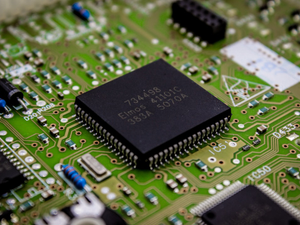
The real challenge for Nvidia isn’t demand, it’s competition and geopolitical complications. Google and Meta are both developing their own chips, trying to break Nvidia’s chokehold on the market. Plus, U.S. trade restrictions have basically blocked Nvidia from selling its most advanced processors to China, cutting into potential growth.
Huang is banking on the next big thing: inference chips. Once an AI model is trained, inference processors let it actually do useful stuff, like write documents or create images, way more efficiently than the original chips that built the model. Think of it like the difference between studying for an exam versus actually taking it. Huang called this shift the “inference inflection”, and he’s betting big on it.
To make sure Nvidia doesn’t lose ground in this emerging market, the company just signed a massive licensing deal with Groq, a startup specializing in inference chips, and hired away some of their top engineers.
Analysts like Dan Ives from Wedbush Securities are watching closely, but they’re still optimistic. Ives thinks Nvidia’s market value could hit $6 trillion within the next year, though he admits we’re in a “white-knuckle period” right now. While Wall Street expects Nvidia’s revenue to surpass $330 billion next year, the company’s dominance is definitely being tested in ways it hasn’t before. The question isn’t whether Nvidia will stay relevant, it’s whether it can maintain its current level of control.
AUTHOR: kg
SOURCE: AP News